
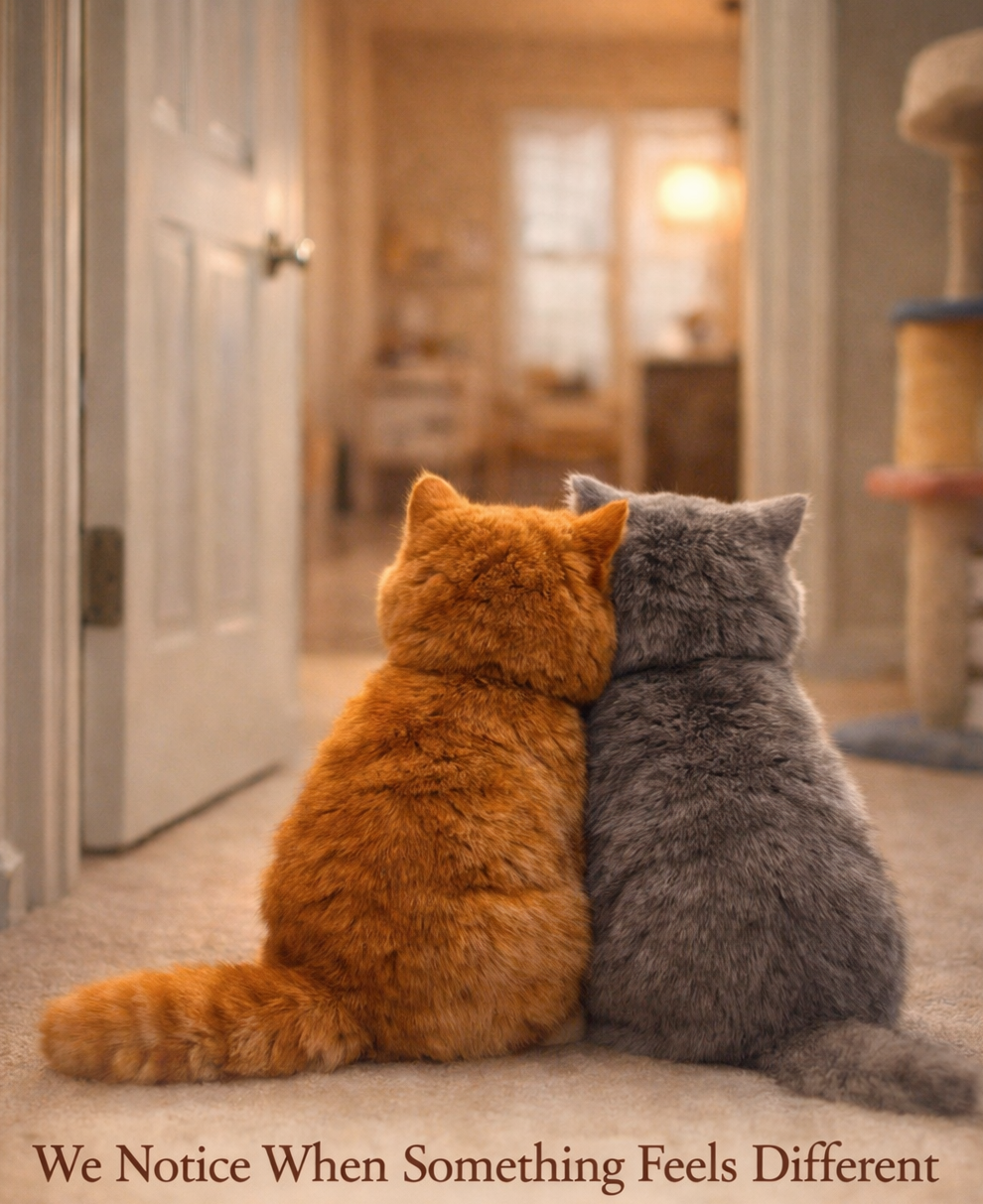
We Notice When Something Feels Different

We may not understand words the way humans do, but we understand change.

We notice when dis house sounds different.
When footsteps don’t arrive where they used to.
When a favorite spot stays empty a little longer than expected.

We notice when meowmie pauses in rooms she once moved through without thinking.
When routines soften.
When the air feels heavier, even though everything looks the same.

Sometimes we wait.
By doors that no longer open.
In places where someone once curled up beside us.
Not because we expect them to return—
but because remembering feels important.

Grief doesn’t always look like sadness.
Sometimes it looks like listening more closely.
Sleeping differently.
Staying nearer than usual.

We feel it too.

And while we don’t rush our feelings, we don’t walk through them alone.
We lean into warmth.
We follow familiar rhythms.
We accept comfort when it’s offered—sunlight on the floor, a gentle hand, a quiet moment shared.

If you’re noticing changes in us after losing a companion, please know dis:
Nothing is wrong.
We’re adjusting, just like you.

Meowmie says that love doesn’t disappear when someone leaves—it changes shape.
We think that’s true.

We’ll carry on together.
One soft moment at a time.

With love,
Pecan Pie & Blueberry Biscuit



Supporting the companions who carry on

Thoughts on helping dogs and cats grieve the loss of their beloved companion

By Dr. Holland

Just like people, our pets form deep bonds with one another. When a companion passes, the surviving pets may experience their own version of grief—often expressed through changes in behavior, appetite, or routines. At Azure Holland, we believe in holding space for every member of the family, including the furry ones who are still with us.

Whether they shared a bed, a bowl, or just quiet time in the same room, dogs and cats often notice and mourn the absence of a friend. While some pets may seem unaffected, others may become withdrawn, restless, or clingy. All of these responses are valid.

Ways to Support Grieving Pets:

  • Let them say goodbye. When appropriate, allowing the surviving pet to see or sniff their companion after passing may help them understand that their friend is gone.

  • Keep routines as steady as possible. Mealtimes, walks, and bedtime rituals offer a sense of normalcy and comfort.

  • Offer extra connection. Gentle affection, time together, and low-key play can help your pet feel safe and supported.

  • Encourage healthy social time. For some pets, gentle introductions to new animal friends can help restore confidence and curiosity. This might mean visiting a trusted friend’s pet, a quiet dog park during off-peak hours, or enrolling in a relaxed group class. Go slowly, and follow your pet’s lead.

  • Treat them to something special. A favorite snack, a new toy, or a soft new bed can bring small moments of comfort. Just like us, pets appreciate kindness expressed through their love languages—especially tasty ones.

  • Enrichment matters. For cats and dogs alike, mental stimulation—like puzzle feeders, new toys, window watching, or scent walks—can ease anxiety and bring gentle joy back into their days.

  • Watch for changes. A temporary shift in behavior is natural, but if your pet stops eating, seems depressed, or shows signs of distress, your family veterinarian may be able to help.

  • Use calming aids if needed. Pheromone diffusers, gentle supplements, sprays or calming wraps can offer support through the transition.

  • Be patient. Grief has no timeline. Some pets rebound quickly; others may need time, reassurance, and space.


You’re not alone in this. If you’re navigating the loss of one pet while caring for another, we’re here to help. Please check out this page on our website if you’d like additional resources.


Every life matters. Every bond is sacred.


If you need additional support or have questions about your pet’s emotional or physical well-being after the loss of a companion, please don’t hesitate to reach out to us. We’re here to help.


This post contains affiliate links. As an Amazon Associate, I may earn a small commission from qualifying purchases at no additional cost to you. I only recommend products I genuinely use and believe in. Thank you for supporting this blog!