A Gentle Spring Reminder

A Gentle Spring Reminder: Hidden Toxins in the Yard

Dr. Azure Holland

As the season shifts, a quiet awareness can help keep your pet safe in the places they love most.

As the weather warms, many families begin spending more time outdoors—opening windows, walking barefoot in the grass, and inviting their pets to enjoy the season alongside them.

For many dogs and cats, the yard is a place of comfort, exploration, and routine. But spring also brings subtle environmental changes that are easy to overlook. Some exposures are not dramatic.
They are quiet, everyday interactions—often introduced with the best of intentions.

This is not a reason for alarm.
But it is a reason for awareness.


Lawn Treatments & Residue

Fertilizers, herbicides, and pesticides are especially common this time of year.

Even when labeled “pet-safe,” these products can still cause irritation or illness depending on:

  • how recently they were applied
  • how much residue remains
  • how your pet interacts with the space

Dogs who lick their paws after being outside, and cats who groom meticulously, may ingest small amounts without it being obvious.

A gentle, practical rhythm for spring:

  • allow treated areas to fully dry before access
  • wipe paws after time outdoors
  • and for pets who love to roll or lie in the grass, consider gently wiping down their coat with a non-toxic, fragrance-free pet wipe

This is especially helpful for:

  • long-haired pets
  • pets with environmental allergies
  • and those who enjoy full-body contact with the lawn

Plants, Pollen & Sensitivities

Spring plantings can introduce both toxicity risks and allergic responses, which can look different depending on the pet.

Cats:

  • highly sensitive to environmental exposures due to grooming habits
  • may show subtle signs such as decreased appetite, hiding, or quiet behavioral changes

Dogs:

  • more likely to experience allergic reactions from grasses and pollens
  • common signs include:
    • licking or chewing paws
    • red or irritated skin (especially belly, armpits, ears)
    • watery eyes or mild congestion

Shared plant risks (dogs & cats):

  • azaleas
  • tulips and daffodil bulbs
  • sago palms

If your pet tends to graze, dig, or carry plants in their mouth, a quick seasonal scan of your yard can be very helpful.

A Special Note for Cat Families: Lilies

Within the broader category of spring plants, there is one exposure that deserves to be named clearly and with care:

Lilies are extremely toxic to cats.

Even very small exposures can be dangerous, including:

  • brushing against pollen and grooming it off later
  • drinking water from a vase containing lilies
  • chewing a leaf or petal

This is one of the few plant exposures where even minimal contact can lead to severe illness.

Because lilies are so commonly included in:

  • spring bouquets
  • holiday arrangements
  • and well-meaning floral gifts

…it is worth being especially mindful of what enters the home this time of year.

For cat households, the safest approach is simply:
to avoid lilies entirely, both indoors and outdoors.

Insect & Pest Control: A Closer Look

Warmer weather brings increased use of pest control products, often placed in areas pets can easily access.

Common concerns include:

  • slug and snail bait (often flavored and highly toxic)
  • ant and roach baits
  • mosquito yard sprays and foggers
  • flea/tick yard treatments

These may be found:

  • along garden borders
  • near foundations
  • under decks or shaded areas

Some are designed to attract pests—meaning they may also attract pets.

A few thoughtful considerations:

  • avoid placing bait in areas your pet can reach
  • be cautious with shared outdoor spaces (neighbors may be using products you’re unaware of)
  • after professional yard treatments, ask specifically about pet re-entry timing
  • and when possible, ask your lawn or pest control specialist about timing and organic or pet-conscious alternatives

This small step can help align your yard care

with your pet’s safety—without sacrificing effectiveness.

Standing Water, Runoff &

Safer Alternatives

Spring rains often create puddles or areas of runoff that collect:

  • lawn chemicals
  • bacteria
  • organic debris

Dogs are especially drawn to these water sources, even when fresh water is available.

A simple, supportive alternative:
Offer a dedicated outdoor water source for your pet.

This might look like:

  • a clean, shaded water bowl refreshed daily
  • a heavy, tip-resistant dish in a familiar outdoor resting area
  • a designated hydration space during time outside

When pets have access to fresh, appealing water, they are far less likely to seek out puddles or runoff.

A Thoughtful Approach

to Outdoor Time

None of this means your pet should avoid the outdoors.

In fact, time outside—when comfortable and safe—can be deeply enriching.

Instead, the goal is a gentle awareness:

  • noticing what has changed in your environment
  • understanding your pet’s unique sensitivities
  • and supporting their natural behaviors with small, intentional care

Wiping paws.
Gently wiping the coat after rolling in the grass.
Offering clean water.

These are simple acts—but they create a meaningful layer of protection.

Keeping Spring Soft

Spring invites us back into the world—into warmth, light, and connection.

With just a bit of intention, it can remain a season that feels as peaceful and safe as it looks.

And if you ever find yourself unsure—whether something your pet encountered may be concerning—it is always appropriate to reach out.

A quiet question, asked early, can often prevent something more urgent later.


Spring has sprung

Spring has sprung… and we have concerns 🌸🐾

Oh hiiii frens,

It is officially SPRING which means the birds are birding, the squirrels are squirreling, and the sunbeams are simply… exquisite.

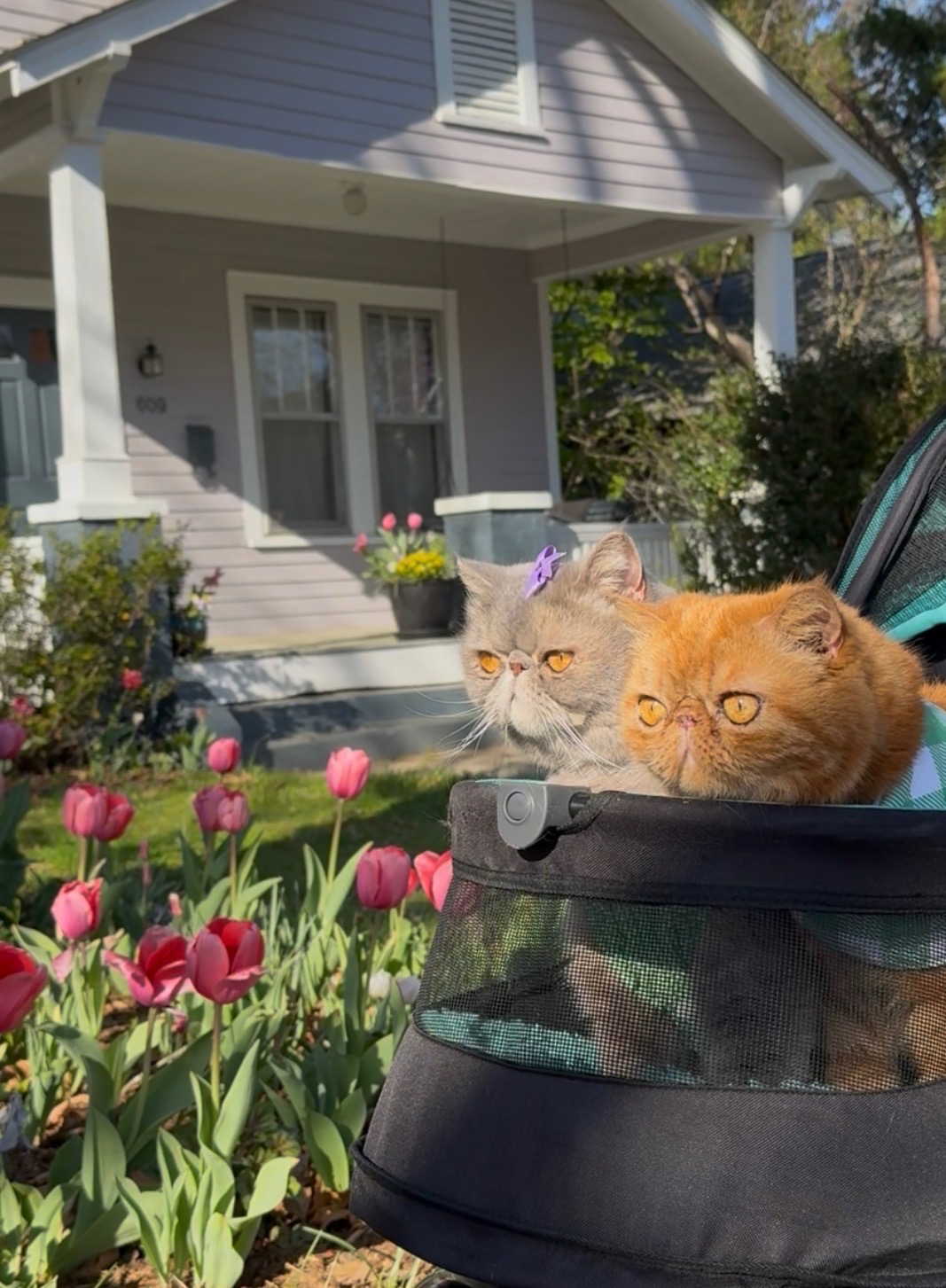
We have been very busy supervising the outdoors from our stroller and window perches. Pecan Pie has been monitoring the pollen levels (very high, very offensive), and Lady Blue has been evaluating the overall vibe of the neighborhood.

And while everything looks very magical out there…
we feel it is our duty as tiny, beautiful professionals to let you know:


Not everything in the yard is as safe as it looks.

There are things that smell interesting… taste interesting… and are, quite frankly, rude to the body.


We are talking about:

  • sneaky plants
  • suspicious lawn treatments
  • mysterious puddles (absolutely not, do not drink dis)

So before your dog goes full goblin mode in the grass…
or before someone (Pecan Pie) tries to nibble a “forbidden leaf (dis is not allowed)”…

We asked our mom, Dr. Holland, to explain everything in a calm, very intelligent, very non-chaotic way.

Because spring should feel soft and beautiful…
not like an emergency.

Please enjoy the outdoors responsibly,
and remember:

just because it is outside does not mean you should put it in your mouth (we are still learning dis).

Stay safe out there,
and avoid disobedience,

xo,
Pecan Pie & Blueberry Biscuit 🫐🥧

Finding Balance in the Skies and at Home

Self-Care in Veterinary Medicine: Finding Balance in the Skies and at Home

By: Dr. Azure Holland

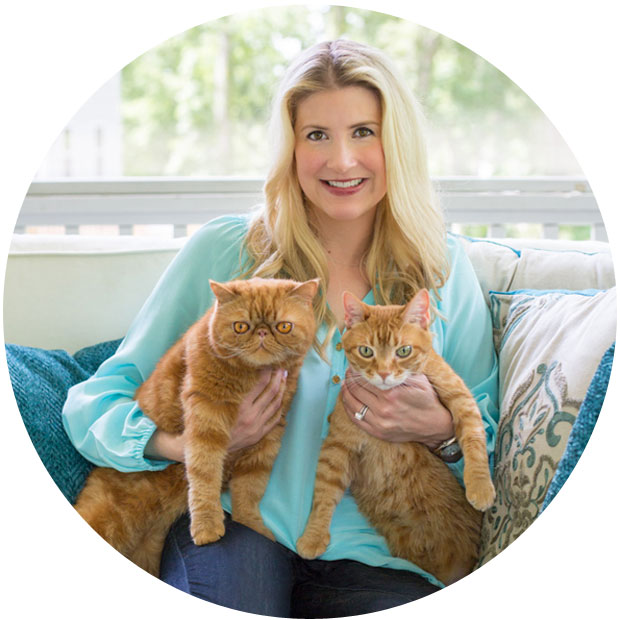
At the very top of my self-care list is connection with my two therapy cats, Pecan Pie and Lady Blueberry Biscuit. No matter how busy or emotionally heavy the day has been, they always bring me back to center. Cats are remarkable companions in that way—they absorb our energy, sense our moods, and ground us with their quiet presence. Simply sitting with them reminds me to breathe, reset, and let go.

In veterinary medicine, compassion is our calling—but it can also take a toll. Long days, emotional goodbyes, and the physical demands of the work can leave even the most dedicated professionals drained. That’s why self-care isn’t a luxury; it’s a necessity.

And this truth isn’t unique to veterinary medicine. Whether you work in healthcare, education, business, or any other demanding profession, self-care is the foundation that allows us to continue showing up with energy, focus, and compassion.

Why Self-Care Matters

  • Prevents Burnout: Taking intentional breaks allows the mind and body to recover, reducing stress and exhaustion.
  • Improves Presence: When we’re rested and centered, we can show up fully for patients, clients, and loved ones.
  • Sustains Compassion: Protecting our own energy prevents compassion fatigue and keeps empathy alive.
  • Models Healthy Balance: When professionals set boundaries and practice self-care, it empowers teams and colleagues to do the same.

Flying as Active Meditation

Alongside time with my cats, one of my other favorite forms of self-care is flying.

When I’m in the cockpit, there’s no space for worrying about what’s for dinner or running through the to-do list. Flying demands full focus. It’s about survival, discipline, and presence.

Pilots have a saying: “Fly the plane.”

It’s a simple yet profound reminder that no matter what distractions or stressors are pulling at you, your first priority is the task at hand. For me, that singular focus becomes a form of active meditation. The hum of the engine, the stretch of horizon, the rhythm of the sky—it’s where I find my balance.

Bringing Self-Care Into Everyday Life

You don’t have to be a pilot or live with therapy cats to find this kind of grounding presence. Here are some simple ways to bring self-care into your daily routine:

  • Take micro-breaks: Step outside, stretch, or breathe deeply—even a few minutes can reset your perspective.
  • Move your body: A walk, yoga, or light exercise helps release tension.
  • Seek connection: Pets, loved ones, or community can restore your spirit.
  • Hold boundaries: Protect your downtime just as seriously as your work commitments.
  • Practice mindful focus: Try an activity that demands your full attention—gardening, painting, cooking—something that keeps you present.

A Final Thought

In caring professions—and in life—it’s easy to pour endlessly into others until we’re empty. But when we protect our own energy and well-being, we’re able to give more freely, more joyfully, and more sustainably.

For me, that means curling up with Pecan Pie and Lady Blueberry Biscuit, or remembering to “fly the plane.”

For you, it may look different—but whatever restores your center, make space for it. Because taking care of yourself is one of the best ways to care for others.


Additional Resources you may enjoy

The Let Them Theory: A Life-Changing Tool That Millions of People Can’t Stop Talking About By: Mel Robbins  

Epsoak Epsom Salt

Foot Roller

Face Mask Ice Pack