When Something Feels Different: Understanding Your Pet’s Quality of Life

By Kristen Lacy

Sometimes the first sign that a beloved companion is changing is not a diagnosis, a dramatic event, or one obvious symptom. Sometimes it is simply a feeling that something is different.

Maybe they are sleeping more, seem restless at night, take longer to get up, have more accidents in the house, or show changes in appetite, breathing, mobility, or interest in the routines they once loved. Individually, these changes may seem small, but together they can begin to tell a larger story. When you are living through those changes every day, it can be difficult to know what they mean or even whether you should be concerned.

That is one of the reasons I believe so strongly in quality-of-life conversations. Families should not have to wait until they are facing an immediate end-of-life decision to have a place to talk openly about what they are noticing, what they are worried about, and what may come next.

The Changes You Notice at Home Matter

You know your companion in a way no one else does. You know their routines, their personality, their favorite things, and the small behaviors that make them who they are. You notice when they stop waiting by the door, no longer follow you into the kitchen, seem less interested in walks, sleep more restlessly, or need more effort to get comfortable.

These everyday observations can give us important information about quality of life. During a Supportive Quality of Life Call, I slow things down with families and give them space to tell me what life actually looks like at home. We may talk about appetite, mobility, breathing, sleep, bathroom habits, anxiety, confusion, social interaction, comfort, and whether their companion is still engaging with the parts of life they have always enjoyed.

Sometimes I use our quality-of-life guide or ask reflective questions to help organize what a family is seeing. Just as often, my job is to listen carefully and reflect those observations back to them. When changes happen gradually, it can be surprisingly difficult to recognize patterns while you are living inside them every day. Hearing your own observations brought together can sometimes make the picture clearer.

This is something families have shared with me again and again after these conversations. Having a dedicated space to talk through everything can make an overwhelming situation feel more manageable. Sometimes they simply needed someone to listen. Sometimes they needed help finding the questions they wanted to ask. Sometimes they already knew what was changing, but saying it out loud helped them understand what they were feeling.

You Do Not Have to Wait Until It Feels Urgent

Many families assume a quality-of-life consultation is something they should schedule only when they believe euthanasia may be imminent. I would much rather speak with a family before they reach that point.

There is tremendous value in having these conversations while there is still time to observe, ask questions, prepare, and enjoy being together. A consultation does not begin with the assumption that it is time to say goodbye. It begins with where you and your companion are today.

Sometimes a family finishes our conversation feeling reassured that their companion is still experiencing comfortable, meaningful days. We may identify things they want to continue watching or questions they would like to discuss with their veterinarian. Other times, talking through the changes helps a family recognize that difficult days have become more frequent or that their companion’s world has gradually become smaller.

Neither outcome is predetermined. I am not there to make the decision for a family, and I do not believe anyone should take that decision away from the people who know and love that animal best. My role is to help families understand what they are seeing, consider quality of life more objectively, prepare for possibilities ahead, and feel supported as they make decisions for their companion.

“I’m Afraid I’ll Do It Too Soon.”

This is one of the most common fears families share with me. The other is, “I’m afraid I’ll wait too long.” Most families carry some version of both fears at the same time.

Unfortunately, there is rarely one perfect moment when every sign suddenly becomes obvious. Quality of life is usually something we evaluate over time. We can consider comfort, mobility, appetite, breathing, sleep, anxiety, interaction, and enjoyment. We can talk about good days and difficult days, but we can also look more deeply at what those days actually contain.

One question I often encourage families to consider is what has always made their companion them. Maybe it is waiting by the window, going for walks, greeting you when you come home, sitting in the sunshine, begging for a favorite treat, sleeping beside you, or simply wanting to be part of whatever the family is doing. As life changes, looking at whether those meaningful experiences are still present can be just as important as counting good and bad days.

These conversations do not remove the emotion from end-of-life decisions, and that is not the goal. Loving an animal deeply means these decisions are going to be emotional. What a thoughtful quality-of-life conversation can do is give that emotion some structure, information, and support.

Planning Ahead Does Not Mean Giving Up

Talking about future care does not mean you have decided that today is the day. It means you are giving yourself an opportunity to understand what may come next before you are trying to make decisions during a crisis.

During our conversations, we can talk about changes to watch for, questions to bring back to your veterinarian, what declining comfort might look like, and what you would want for your companion if their condition changed quickly. We can also talk about practical considerations that families often do not think about until they suddenly need to.

If euthanasia may eventually become part of your companion’s care, understanding what that process looks like beforehand can make the unknown less frightening. You can think about where you would want to be, who you would want present, what would make your companion most comfortable, and what questions you want answered before that day arrives.

If that time is not now, that is okay. In fact, sometimes one of the most meaningful outcomes of a consultation is realizing that you have more time.

Another Layer of Support for Your Family

A Supportive Quality of Life Call is not a replacement for your veterinarian or the medical care they provide. Your veterinary team remains an essential part of your companion’s care, particularly when medical evaluation, diagnosis, treatment, or changes in symptoms are needed.

My role is different. I provide another layer of support and additional time to focus specifically on quality of life, the changes happening at home, the questions families are carrying, and the emotional and practical realities of caring for an aging or seriously ill companion.

I have spent a great deal of time talking with families who love their animals deeply and are trying to do right by them during an incredibly difficult season of life. One thing I have learned from those conversations is that families often know far more than they think they do. They are noticing the changes. They know their companion. They care tremendously about making a thoughtful decision. What they sometimes need is someone to help them slow everything down, put those observations into words, and look at the situation as a whole.

That is what I hope to provide during a Supportive Quality of Life Call: a calm place to talk, ask questions, think out loud, and prepare without pressure.

Whether your companion is living with cancer, kidney disease, cognitive changes, mobility challenges, advanced age, or another serious or progressive condition, you do not have to wait until everything feels urgent to begin thinking about what comes next. You can ask questions before you have all the answers, and you can prepare before you have made a decision.

Most importantly, you can have these conversations while there are still good days left. Preparing for what may eventually come does not take anything away from the time you have together. Sometimes it allows you to spend more of that time simply being with them.

 

The Azure Holland Quality of Life Guide


June Mews – Preparing for Departure!

We knew something was happening when the boxes started arriving.

At first, it was just dis one.

Then another.

Then there were stickers on the dining room table.

Then signs leaning against the wall.

Then boarding passes.

Then a cat tree appeared in the living room that neither of us was allowed to claim permanently.

Naturally, we launched an investigation.

Pecan Pie supervised from a comfortable position nearby.

I, Blueberry Biscuit, took a more active role in quality control.

After several weeks of careful observation, we have reached dis conclusion:

Our mom is preparing for Carolina Kitty Con.

The clues are everywhere.

There have been conversations about table runners, lounge passes, giveaways, signs, stickers, and approximately one million other details that humans apparently consider important.

Pecan Pie has been extremely interested in the process.

Mostly because every box might contain treats.

So far, this strategy has been unsuccessful.

Still, he remains optimistic.

Meanwhile, I have been reviewing the plans for our Luxury Flight Lounge.

The seating appears acceptable.

The décor is coming together nicely.

The overall atmosphere is appropriately refined.

This will do.

We are especially excited because Carolina Kitty Con means we get to meet fellow cat enthusiasts and hear stories about the cats who share your homes and your hearts.

One of our favorite things about traveling is meeting new people. Whether we’re flying across the country, exploring a new town, relaxing on a boat, or simply accompanying Mom on one of her adventures, we love seeing how much joy cats bring to the lives of their humans.

Mom often says that every cat has a story.

We think every human does too.

And we love hearing both.

While we are preparing the lounge, Mom is busy getting ready for her presentation on traveling with cats. As experienced travel cats ourselves, we feel uniquely qualified to offer our support.

Pecan Pie’s contribution has primarily involved demonstrating proper napping techniques in airports.

I have focused on maintaining high standards for accommodations.

Together, we believe we make an excellent team.

As June 20th and 21st get closer, the excitement around our house continues to build.

There are still boxes arriving.

There are still lists being made.

And there is still a surprising amount of work involved in creating a lounge worthy of distinguished feline guests.

We hope you’ll stop by and say hello if you’re attending Carolina Kitty Con.

We’ll be the ones overseeing operations from the comfort of dis first class.

Purrs,

Pecan Pie & Lady Blueberry Biscuit

While we’re busy preparing for departure, Mom is busy preparing for Carolina Kitty Con too.

She’ll be speaking about traveling with cats—everything from road trips and air travel to hiking, boating, and helping families determine whether their cat is truly an adventure cat.

We’ll let her take it from here.

Dr. Azure’s Perspective: Is Your Cat an Adventure Cat?


Is Your Cat an Adventure Cat?

Dr. Azure Holland’s Perspective: Is Your Cat an Adventure Cat?

When most people think about traveling with cats, they picture an airline carrier and a trip through the airport.

But cat travel can look very different from that.

Some cats enjoy road trips. Some accompany their families to vacation homes. Some explore hiking trails in backpacks or harnesses. Some spend weekends on boats. Others are perfectly content joining their people for a quiet getaway and watching the world from a sunny window.

As both a veterinarian and a cat mom to two well-traveled cats, I’ve had the opportunity to see firsthand how different cats respond to adventure.

One of the biggest misconceptions I encounter is that cats either travel well or they don’t.

The reality is much more nuanced.

Just like people, cats have different personalities, preferences, and comfort levels. Some are naturally curious and adaptable. Others thrive on routine and familiarity. Neither approach is right or wrong.

The goal isn’t to turn every cat into a hiking cat, a boating cat, or a frequent flyer.

The goal is to understand the individual cat in front of you.

When families ask me whether their cat would enjoy travel, I encourage them to look beyond the destination and focus on the experience. Is the cat relaxed in new environments? Do they recover quickly from changes in routine? Are they curious and confident, or do they become overwhelmed when their surroundings change?

The answers to those questions are often more important than the mode of transportation itself.

June 20 & 21 2006, I’ll be speaking at Carolina Kitty Con about traveling with cats and sharing practical guidance for families considering adventures with their feline companions. We’ll discuss everything from car rides and air travel to hiking, boating, and helping cats experience the world safely and comfortably.

Not every cat wants an adventure.

But for those that do, the journey can be incredibly rewarding.

Wishing you and your feline family a wonderful summer,

Dr. Azure Holland

As I prepare for Carolina Kitty Con and my presentation on traveling with cats, two very enthusiastic feline assistants have been closely monitoring the preparations. I’ll let them explain.


A Gentle Spring Reminder

A Gentle Spring Reminder: Hidden Toxins in the Yard

Dr. Azure Holland

As the season shifts, a quiet awareness can help keep your pet safe in the places they love most.

As the weather warms, many families begin spending more time outdoors—opening windows, walking barefoot in the grass, and inviting their pets to enjoy the season alongside them.

For many dogs and cats, the yard is a place of comfort, exploration, and routine. But spring also brings subtle environmental changes that are easy to overlook. Some exposures are not dramatic.
They are quiet, everyday interactions—often introduced with the best of intentions.

This is not a reason for alarm.
But it is a reason for awareness.


Lawn Treatments & Residue

Fertilizers, herbicides, and pesticides are especially common this time of year.

Even when labeled “pet-safe,” these products can still cause irritation or illness depending on:

  • how recently they were applied
  • how much residue remains
  • how your pet interacts with the space

Dogs who lick their paws after being outside, and cats who groom meticulously, may ingest small amounts without it being obvious.

A gentle, practical rhythm for spring:

  • allow treated areas to fully dry before access
  • wipe paws after time outdoors
  • and for pets who love to roll or lie in the grass, consider gently wiping down their coat with a non-toxic, fragrance-free pet wipe

This is especially helpful for:

  • long-haired pets
  • pets with environmental allergies
  • and those who enjoy full-body contact with the lawn

Plants, Pollen & Sensitivities

Spring plantings can introduce both toxicity risks and allergic responses, which can look different depending on the pet.

Cats:

  • highly sensitive to environmental exposures due to grooming habits
  • may show subtle signs such as decreased appetite, hiding, or quiet behavioral changes

Dogs:

  • more likely to experience allergic reactions from grasses and pollens
  • common signs include:
    • licking or chewing paws
    • red or irritated skin (especially belly, armpits, ears)
    • watery eyes or mild congestion

Shared plant risks (dogs & cats):

  • azaleas
  • tulips and daffodil bulbs
  • sago palms

If your pet tends to graze, dig, or carry plants in their mouth, a quick seasonal scan of your yard can be very helpful.

A Special Note for Cat Families: Lilies

Within the broader category of spring plants, there is one exposure that deserves to be named clearly and with care:

Lilies are extremely toxic to cats.

Even very small exposures can be dangerous, including:

  • brushing against pollen and grooming it off later
  • drinking water from a vase containing lilies
  • chewing a leaf or petal

This is one of the few plant exposures where even minimal contact can lead to severe illness.

Because lilies are so commonly included in:

  • spring bouquets
  • holiday arrangements
  • and well-meaning floral gifts

…it is worth being especially mindful of what enters the home this time of year.

For cat households, the safest approach is simply:
to avoid lilies entirely, both indoors and outdoors.

Insect & Pest Control: A Closer Look

Warmer weather brings increased use of pest control products, often placed in areas pets can easily access.

Common concerns include:

  • slug and snail bait (often flavored and highly toxic)
  • ant and roach baits
  • mosquito yard sprays and foggers
  • flea/tick yard treatments

These may be found:

  • along garden borders
  • near foundations
  • under decks or shaded areas

Some are designed to attract pests—meaning they may also attract pets.

A few thoughtful considerations:

  • avoid placing bait in areas your pet can reach
  • be cautious with shared outdoor spaces (neighbors may be using products you’re unaware of)
  • after professional yard treatments, ask specifically about pet re-entry timing
  • and when possible, ask your lawn or pest control specialist about timing and organic or pet-conscious alternatives

This small step can help align your yard care

with your pet’s safety—without sacrificing effectiveness.

Standing Water, Runoff &

Safer Alternatives

Spring rains often create puddles or areas of runoff that collect:

  • lawn chemicals
  • bacteria
  • organic debris

Dogs are especially drawn to these water sources, even when fresh water is available.

A simple, supportive alternative:
Offer a dedicated outdoor water source for your pet.

This might look like:

  • a clean, shaded water bowl refreshed daily
  • a heavy, tip-resistant dish in a familiar outdoor resting area
  • a designated hydration space during time outside

When pets have access to fresh, appealing water, they are far less likely to seek out puddles or runoff.

A Thoughtful Approach

to Outdoor Time

None of this means your pet should avoid the outdoors.

In fact, time outside—when comfortable and safe—can be deeply enriching.

Instead, the goal is a gentle awareness:

  • noticing what has changed in your environment
  • understanding your pet’s unique sensitivities
  • and supporting their natural behaviors with small, intentional care

Wiping paws.
Gently wiping the coat after rolling in the grass.
Offering clean water.

These are simple acts—but they create a meaningful layer of protection.

Keeping Spring Soft

Spring invites us back into the world—into warmth, light, and connection.

With just a bit of intention, it can remain a season that feels as peaceful and safe as it looks.

And if you ever find yourself unsure—whether something your pet encountered may be concerning—it is always appropriate to reach out.

A quiet question, asked early, can often prevent something more urgent later.


Spring has sprung

Spring has sprung… and we have concerns 🌸🐾

Oh hiiii frens,

It is officially SPRING which means the birds are birding, the squirrels are squirreling, and the sunbeams are simply… exquisite.

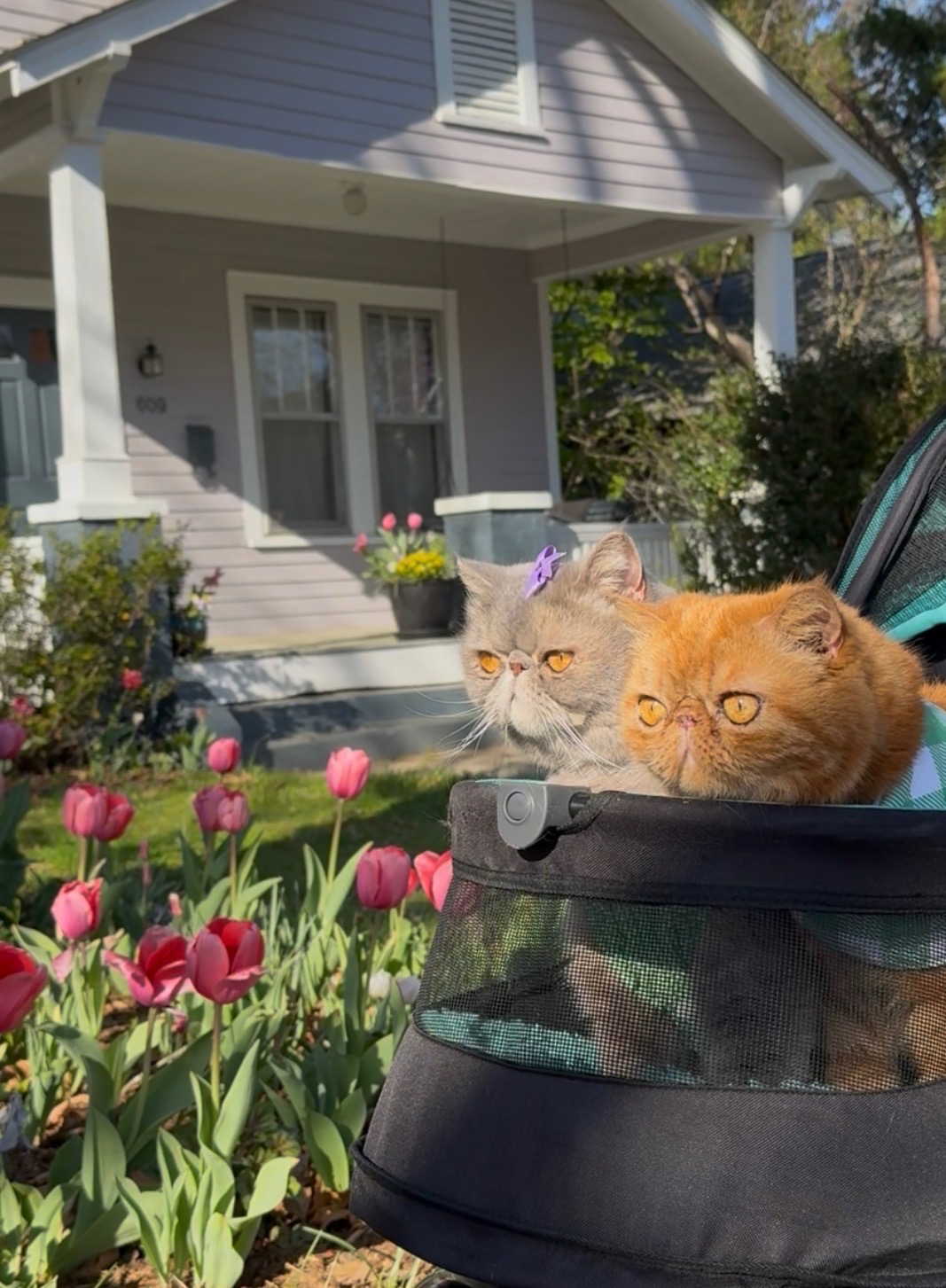
We have been very busy supervising the outdoors from our stroller and window perches. Pecan Pie has been monitoring the pollen levels (very high, very offensive), and Lady Blue has been evaluating the overall vibe of the neighborhood.

And while everything looks very magical out there…
we feel it is our duty as tiny, beautiful professionals to let you know:


Not everything in the yard is as safe as it looks.

There are things that smell interesting… taste interesting… and are, quite frankly, rude to the body.


We are talking about:

  • sneaky plants
  • suspicious lawn treatments
  • mysterious puddles (absolutely not, do not drink dis)

So before your dog goes full goblin mode in the grass…
or before someone (Pecan Pie) tries to nibble a “forbidden leaf (dis is not allowed)”…

We asked our mom, Dr. Holland, to explain everything in a calm, very intelligent, very non-chaotic way.

Because spring should feel soft and beautiful…
not like an emergency.

Please enjoy the outdoors responsibly,
and remember:

just because it is outside does not mean you should put it in your mouth (we are still learning dis).

Stay safe out there,
and avoid disobedience,

xo,
Pecan Pie & Blueberry Biscuit 🫐🥧

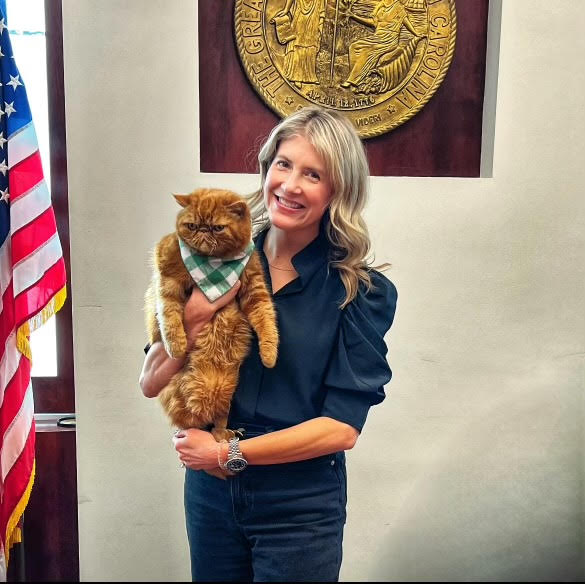
Dr. Azure Holland has been reappointed by NC Governor Roy Cooper

Update: August 2024, Dr. Holland has been elected and reelected President of the board July 2022, 2023, 2024 and reappointed by Gov Cooper July 2023.


Raleigh, NC – On July 1, 2018 Dr. Azure Holland, owner of Azure Holland Mobile Veterinary Service was appointed by North Carolina Governor, Roy Cooper to the North Carolina Veterinary Medical Board.

The North Carolina Veterinary Medical Board (NCVMB), a state regulatory and consumer protection agency, was created in 1903 by an act of the State Legislature. Their mission is to safeguard the health, safety and welfare of the people and animals of North Carolina.

The Board is responsible for governing the practice of veterinary medicine. Its primary responsibilities are examination of applicants, issuing and renewing licenses/registrations, formal complaints, practice name approvals, and inspections of all veterinary practices throughout the State.

The Board consists of eight (8) members; these members are appointed by the Governor, the Speaker of the House, President Pro Tempore, and the Commissioner of Agriculture.

“It is such an honor to be appointed and I look forward to serving the people and animals of North Carolina.” Dr. Azure Holland

About Dr. Azure Holland
Dr. Azure Holland is from Bailey – a small town in Eastern North Carolina. She graduated from North Carolina State University with a B.S. in Animal Science and attended the University of Tennessee Veterinary School, graduating in 2007. Dr. Holland has been in private practice in the Triangle area since that time.

About Azure Holland Mobile Veterinary Service
Azure Holland Mobile Veterinary Service focuses only on in home pet euthanasia and veterinary hospice. We believe this is the most compassionate option for pets because it offers the comfort and familiarity of home for dogs or cats as well as privacy for families. Because comfort, familiarity, and family mean everything. Once you have made the difficult decision to let your pet pass on peacefully, our doctors can provide the kindest and most compassionate way to say goodbye.