When Something Feels Different: Understanding Your Pet’s Quality of Life

By Kristen Lacy

Sometimes the first sign that a beloved companion is changing is not a diagnosis, a dramatic event, or one obvious symptom. Sometimes it is simply a feeling that something is different.

Maybe they are sleeping more, seem restless at night, take longer to get up, have more accidents in the house, or show changes in appetite, breathing, mobility, or interest in the routines they once loved. Individually, these changes may seem small, but together they can begin to tell a larger story. When you are living through those changes every day, it can be difficult to know what they mean or even whether you should be concerned.

That is one of the reasons I believe so strongly in quality-of-life conversations. Families should not have to wait until they are facing an immediate end-of-life decision to have a place to talk openly about what they are noticing, what they are worried about, and what may come next.

The Changes You Notice at Home Matter

You know your companion in a way no one else does. You know their routines, their personality, their favorite things, and the small behaviors that make them who they are. You notice when they stop waiting by the door, no longer follow you into the kitchen, seem less interested in walks, sleep more restlessly, or need more effort to get comfortable.

These everyday observations can give us important information about quality of life. During a Supportive Quality of Life Call, I slow things down with families and give them space to tell me what life actually looks like at home. We may talk about appetite, mobility, breathing, sleep, bathroom habits, anxiety, confusion, social interaction, comfort, and whether their companion is still engaging with the parts of life they have always enjoyed.

Sometimes I use our quality-of-life guide or ask reflective questions to help organize what a family is seeing. Just as often, my job is to listen carefully and reflect those observations back to them. When changes happen gradually, it can be surprisingly difficult to recognize patterns while you are living inside them every day. Hearing your own observations brought together can sometimes make the picture clearer.

This is something families have shared with me again and again after these conversations. Having a dedicated space to talk through everything can make an overwhelming situation feel more manageable. Sometimes they simply needed someone to listen. Sometimes they needed help finding the questions they wanted to ask. Sometimes they already knew what was changing, but saying it out loud helped them understand what they were feeling.

You Do Not Have to Wait Until It Feels Urgent

Many families assume a quality-of-life consultation is something they should schedule only when they believe euthanasia may be imminent. I would much rather speak with a family before they reach that point.

There is tremendous value in having these conversations while there is still time to observe, ask questions, prepare, and enjoy being together. A consultation does not begin with the assumption that it is time to say goodbye. It begins with where you and your companion are today.

Sometimes a family finishes our conversation feeling reassured that their companion is still experiencing comfortable, meaningful days. We may identify things they want to continue watching or questions they would like to discuss with their veterinarian. Other times, talking through the changes helps a family recognize that difficult days have become more frequent or that their companion’s world has gradually become smaller.

Neither outcome is predetermined. I am not there to make the decision for a family, and I do not believe anyone should take that decision away from the people who know and love that animal best. My role is to help families understand what they are seeing, consider quality of life more objectively, prepare for possibilities ahead, and feel supported as they make decisions for their companion.

“I’m Afraid I’ll Do It Too Soon.”

This is one of the most common fears families share with me. The other is, “I’m afraid I’ll wait too long.” Most families carry some version of both fears at the same time.

Unfortunately, there is rarely one perfect moment when every sign suddenly becomes obvious. Quality of life is usually something we evaluate over time. We can consider comfort, mobility, appetite, breathing, sleep, anxiety, interaction, and enjoyment. We can talk about good days and difficult days, but we can also look more deeply at what those days actually contain.

One question I often encourage families to consider is what has always made their companion them. Maybe it is waiting by the window, going for walks, greeting you when you come home, sitting in the sunshine, begging for a favorite treat, sleeping beside you, or simply wanting to be part of whatever the family is doing. As life changes, looking at whether those meaningful experiences are still present can be just as important as counting good and bad days.

These conversations do not remove the emotion from end-of-life decisions, and that is not the goal. Loving an animal deeply means these decisions are going to be emotional. What a thoughtful quality-of-life conversation can do is give that emotion some structure, information, and support.

Planning Ahead Does Not Mean Giving Up

Talking about future care does not mean you have decided that today is the day. It means you are giving yourself an opportunity to understand what may come next before you are trying to make decisions during a crisis.

During our conversations, we can talk about changes to watch for, questions to bring back to your veterinarian, what declining comfort might look like, and what you would want for your companion if their condition changed quickly. We can also talk about practical considerations that families often do not think about until they suddenly need to.

If euthanasia may eventually become part of your companion’s care, understanding what that process looks like beforehand can make the unknown less frightening. You can think about where you would want to be, who you would want present, what would make your companion most comfortable, and what questions you want answered before that day arrives.

If that time is not now, that is okay. In fact, sometimes one of the most meaningful outcomes of a consultation is realizing that you have more time.

Another Layer of Support for Your Family

A Supportive Quality of Life Call is not a replacement for your veterinarian or the medical care they provide. Your veterinary team remains an essential part of your companion’s care, particularly when medical evaluation, diagnosis, treatment, or changes in symptoms are needed.

My role is different. I provide another layer of support and additional time to focus specifically on quality of life, the changes happening at home, the questions families are carrying, and the emotional and practical realities of caring for an aging or seriously ill companion.

I have spent a great deal of time talking with families who love their animals deeply and are trying to do right by them during an incredibly difficult season of life. One thing I have learned from those conversations is that families often know far more than they think they do. They are noticing the changes. They know their companion. They care tremendously about making a thoughtful decision. What they sometimes need is someone to help them slow everything down, put those observations into words, and look at the situation as a whole.

That is what I hope to provide during a Supportive Quality of Life Call: a calm place to talk, ask questions, think out loud, and prepare without pressure.

Whether your companion is living with cancer, kidney disease, cognitive changes, mobility challenges, advanced age, or another serious or progressive condition, you do not have to wait until everything feels urgent to begin thinking about what comes next. You can ask questions before you have all the answers, and you can prepare before you have made a decision.

Most importantly, you can have these conversations while there are still good days left. Preparing for what may eventually come does not take anything away from the time you have together. Sometimes it allows you to spend more of that time simply being with them.


The Azure Holland Quality of Life Guide


Considering an Outdoor Goodbye as the Weather Warms

A thoughtful guide for families

As the weather warms, many families begin asking about the possibility of saying goodbye outdoors — in a backyard, garden, or other meaningful space. For some pets and families, an outdoor farewell can feel deeply personal and beautiful.

At the same time, outdoor appointments require additional thought and planning. Below are a few important considerations to help you decide whether this option is the right fit for your pet on the day of their visit.

Is your pet truly comfortable outdoors?

Some pets love being outside. Others enjoy it in short bursts but become overstimulated or unsettled when they cannot move freely.

Ask yourself:

  • Does your pet regularly rest and relax outdoors?
  • Are they accustomed to lying quietly outside, or are they typically alert, pacing, or on watch?

If your dog usually spends time chasing squirrels, watching birds, or reacting to every sound in the neighborhood, it may be more difficult for them to fully relax and settle into sedation outdoors.

Consider the environment around you

Outdoor spaces come with variables we cannot always control:

  • Lawn equipment, traffic, neighbors, or nearby construction
  • Wildlife activity
  • Sudden noises or movement

Even gentle distractions can make it harder for a pet to feel calm during sedation, which is an important part of ensuring a peaceful experience.

Temperature and humidity matter — more than most people realize

The single most important consideration for an outdoor appointment is temperature and humidity.

In warm or humid conditions:

  • Sedated pets can have more difficulty regulating their breathing
  • Heat and humidity may increase respiratory effort once sedation begins
  • Overall comfort and safety can be affected more quickly than in an indoor setting

For this reason, outdoor farewells may not be recommended on particularly hot or humid days, even when the outdoor space itself feels meaningful.

Sedation outdoors can be more complex

In our experience, pets often require more time — and sometimes more medication — to fully relax outdoors due to environmental stimulation.

This may lead to:

  • A longer sedation process
  • Increased medication to achieve adequate relaxation
  • Lower blood pressure as sedation deepens
  • Greater difficulty placing an IV catheter once sedation has taken effect

Our goal is always to minimize intervention and support the gentlest possible transition.

Comfort of the space matters

When planning an outdoor farewell, the comfort of the physical space itself is an important — and often overlooked — consideration.

Uneven ground, stone patios, or hard surfaces can make it more difficult for a sedated pet to remain comfortably positioned. A level, padded surface such as a blanket or bed helps support relaxation and stability throughout the visit.

Warm weather can also bring increased insect activity. Flies, mosquitoes, and other insects may be distracting or uncomfortable for pets during sedation and may require gentle repositioning or covering to maintain comfort.

These details may seem small, but they can meaningfully affect how peaceful the experience feels for your pet.

Flexibility on the day of the visit

Even with careful planning, outdoor appointments may need to shift indoors based on how your pet is responding, changing weather, or environmental factors.

Being open to this flexibility allows us to prioritize comfort above all else.

Our guiding principle

Outdoor farewells can be beautiful — but they are never chosen for aesthetics alone.

Every recommendation we make is rooted in:

  • Your pet’s comfort
  • Medical safety
  • A peaceful, unhurried experience

Our role is to guide, not rush, and to help you choose the setting that best supports your pet on that day.

The most meaningful goodbye is not defined by location, but by the gentleness of the experience and the care taken at every step.


More info on our Services


Decorate With Us!

Creating a Safe, Cozy Holiday Home for Pets

By Pecan Pie & Blueberry Biscuit (with a little help from Meowmie, Dr. Azure Holland)

Hello, friends! It’s us — Pecan Pie and Blueberry Biscuit.
We are the official holiday decorating supervisors in our house. The holidays begin the moment the storage boxes appear… and so do we.

We know your pets are probably just as curious as we are. So we wanted to share a few tips — from a pet’s-eye view — on how to decorate for da holidays in a way that feels safe, calm, and cozy for everyone.

1. Begin With a Calm, Cozy Environment

Before you hang even one ornament, your pets are already taking it all in. Boxes. Tape. Furniture moving. New smells. It’s a lot.

For cats like us:

  • We love a designated perch nearby — a soft blanket, window seat, or cat tree where we can watch the action unfold..
  • A favorite toy or scratcher helps us redirect our zoomies away from the tree.
  • Let us supervise from a safe distance; we’re very good at su-purr-vision.

For dogs:

  • A long-lasting chew or snuffle mat keeps them happily busy while you rearrange things.
  • Let them stay where they can see you but not be underfoot (or under-tree).
  • Senior or anxious pups may appreciate a quiet, cozy corner.

A calm setup helps us feel safe before the big, sparkly tree even arrives.

2. Bringing the Tree Inside — Without Pets Sneaking Out

When the tree comes through the door? That’s chaos… and we love it. But it’s also the perfect moment for a cat or dog to slip outside.

Here’s how to keep us safe:

Create a Pet “Holding Zone”
Before opening the door, tuck us into a comfy room with:

  • A favorite bed or blanket
  • A familiar toy
  • Maybe a treat puzzle or chew
  • Soft background music

Use Barriers Wisely
A baby gate or exercise pen adds an extra layer of security between us and the open door.

Give Us a Job (Enrichment) Before Tree Time

  • Dogs: snuffle mat, frozen Kong, or chew
  • Cats: a quick play session, lick mat, or our favorite a Churu snack

Tired brains = less interest in door-dashing.

Teamwork Helps
If one human carries the tree and another keeps an eye on us, everyone wins.

Keep ID & Microchips Updated
More visitors, more deliveries, more open doors — updated tags and microchips are an important backup.

When the tree is finally inside and the door is closed, don’t forget to tell us we’ve been dis very good helpers. Treats appreciated.

3. Christmas Tree Safety Once It’s Inside

The tree is up. The room smells different. Everything is new. We notice.

For cats:

  • Please anchor the tree so it doesn’t tip if we investigate.
  • Avoid putting chairs or tables right next to the tree — they become perfect launch pads.
  • If you have a live tree, cover the water or skip additives; we shouldn’t be drinking from it.

For dogs:

  • Many dogs love to sneak sips of tree water — a secure cover is best.
  • Tuck away dangling cords so they’re not chew toys.
  • Sweep up fallen needles often so they don’t get stuck in paws or tummies.

Whether the tree is real or artificial, stability + supervision = happy, safe holidays.

4. Ornament Safety: What to Use & What to Skip

We admit it: shiny, dangly, jingly things are… irresistible and sometimes our paws can’t help but play.

Safer Choices:
✔️ Shatterproof ornaments on lower branches
✔️ Lightweight decorations that won’t hurt if they fall
✔️ Secure hooks that don’t pop off easily

Best to Avoid at Pet Height:
✖️ Tinsel (especially dangerous for cats if swallowed)
✖️ Fragile glass ornaments at tail-level
✖️ Edible ornaments like salt dough or popcorn garlands

Put heirloom and delicate ornaments higher on the tree, where they can sparkle safely out of paw’s reach.

️ 5. General Holiday Décor Safety

Once the tree is done, the rest of the house starts to sparkle too — and we notice all of it.

Flameless Candles, or Real Candles Out of Reach
Real flames are scary (and dangerous around tails, whiskers, and curious noses). Flameless candles give the same cozy glow.

Hide or Secure Electrical Cords
Especially if you live with a puppy or a cat who likes to chew, tucking cords away keeps everyone safe.

Go Easy on Strong Scents
Potpourri, simmer pots, and some essential oils can bother our airways or make us feel sick.

Place Tabletop Décor Out of Reach
If it’s glittery, chewable, or breakable, assume we will investigate. Higher shelves and secure placements help us all enjoy the décor without accidents.

From our paws to yours:
Decorating doesn’t just make things beautiful — it makes your home feel like a purr-fect nest. With a little planning, you can keep it festive and safe… so we can all curl up together and enjoy the glow.

Love,
Pecan Pie & Blueberry Biscuit


Loss and Grief with Dr. Holland

The loss of your dog or cat is one of the hardest things that a pet parent has to navigate.

Throughout this journey of the final life stage, there are an array of emotions that can come up.  I have had to say goodbye to beloved fur babies and the grief has been intense.  Here are some things that have come up in me as I have traveled along the path of grief and loss and to finally finding happiness again.

Is it crazy for this to hurt so much?

No. The grief that I have felt for a beloved pet passing surpasses anything that I have felt for another human in their passing.  Pets are often the center of the home and the focus of our love and attention.  They comfort us and they know us fully, including our habits and secrets.  They are often our “mini-me’s”  and it’s only natural that with a relationship that strong and meaningful that we could have a powerful amount of grief.

Here are the 6 stages of grief and how they may show up in the process of losing a pet: 

  1. Shock and disbelief-  the first responses to the loss of a beloved pet.  This can last anywhere from a few hours to several days.
  2. Anger, alienation and distancing- anger can come up in many forms.  Often there is anger about the disease that took your baby, or at the Dr. that wasn’t able to save them.  Anger when carried to an extreme level can keep you from moving through the healing process and fully experiencing grief.
  3. Denial- having trouble accepting that your fur baby is really gone.  Typically this stage is very quick and is rooted in fantasy.
  4. Guilt- the more that you loved your baby, the more likely you are to experience guilt.  Experiencing guilt on some level is very natural as we rethink the final life stage of your fur baby and the decisions made for care at the end.
  5. Depression- It is normal to feel depression with intense mourning. With the loss of all my babies and in particular my kitty Mantis, the depression was pretty marked.  I would wake up in the morning and ask myself, “Will I ever be happy again?”.  I was already in therapy at the time Mantis passed and I used sessions to process this incredible loss. *If the depression becomes too intense or prolonged than one should seek help from a trained professional
  6. Resolution- a time for spiritual healing.  In this final stage, we move through the grief and are able to hold onto the memories and the love of our beloved while moving forward with life’s activities.

How can I process my feelings?

The most therapeutic thing we can do is lean into our emotions and pain.  In order to get through the other side of grief, we have to feel deeply and sit with the heartbreak and anguish of the loss. Bottling it up and pretending we are ok will only delay the healing process.  I have found it especially helpful to speak with my trusted therapist or friends that are pet people.  Getting the feelings out is the most important part of the healing process.  Crying is one of the most cleansing and cathartic things that we can do for the soul.  Other ways to process and move grief through your body:  exercise, dance, meditation, journaling, etc. Express yourself and try not to hold it in.

I have been lucky to be surrounded by other pet people during my grieving process.  If you don’t have pet people in your inner circle, seek them out.  This type of understanding can be so very helpful in your healing journey.

Some practical suggestions:

Find other sympathetic and supportive people to lean on to get your feelings out in a safe environment.

Allow emotions to flow, don’t bottle them up.

It’s never too late to say something to your beloved deceased pet. Write a letter to them sharing how much you love recounting the special memories that you have.

Dedicate or donate something in your pet’s name.  Knowing that they are helping other fur babies is a way for them to continue on.

Establish new routines at home. Pets, more than anything in our lives, are rooted in our living patterns. Don’t be scared to shake things up!

Hold some sort of private service or memorial for your pet.  This can be as simple or as involved as you wish.

Attend a pet loss or bereavement support group.  Allow yourself to share fully and experience the grief in a safe space.

If/When you are ready to bring a new fur baby into your life, tell them stories of your beloved one who passed.

Pecan Pie’s Tips for Surviving the Holidays. Literally.

This time of the year more than most I hear a lot of my friends having to make unnecessary trips to the Vet’s office which is not a fun place most of the time, however, since my Mom works there, I don’t mind visiting.

The tree is a lot of fun and many friends have had trouble with those light cords. I have asked my mom and Dad to unplug the cord just to be safe while they are out.

My Mom tells me that during the holidays she sees more ingested items such as ornaments, parts of presents and other decorations which can lead to expensive surgeries, so get your pet parents to look out for small items like this and put the breakable smaller ornaments up higher on the tree.

I love this time of the year the most for new food items to sample, but I am told they are not good for me and that I need to stick to my cat food.  Human food can be high in sugar and carbohydrates that are bad for me and can lead to long term health conditions that are no fun.

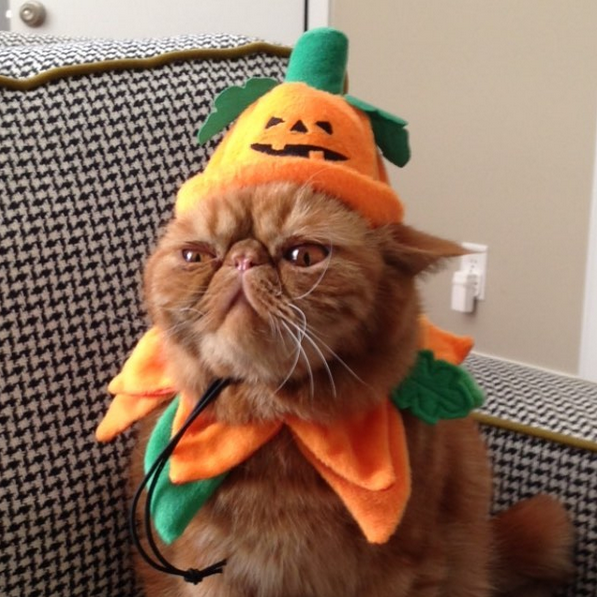
So stay safe out there, and resist all efforts to be put in a costume!  As you can see I have not been successful.

By Pecan Pie (with assistance from Dr. Holland)